
Vegetarian Certification
The dedicated vegetarian mark — lacto, ovo or lacto-ovo stated on the certificate, so your label says exactly what a reviewer verified.
Vegetarian certification is independent verification that a product contains no meat, fish or slaughter by-products such as gelatin or animal rennet. V-Cert defines lacto, ovo and lacto-ovo variants in a written standard, states the verified variant on every certificate, and gives each certificate a number a buyer can check in seconds.
Tell us what you make and a certification reviewer scopes your quote with you.

Vegetarian certification
Get my quoteWhy this claim pays
39%
39% of Indian adults describe themselves as vegetarian — the largest vegetarian consumer base in the world.
India backs the category with mandatory veg/non-veg marking law; everywhere else it is quietly huge and badly served. Vegan marks exclude every dairy-and-egg formulation, and a bare “vegetarian” flag means different things in Mumbai and Munich. A certificate that names its variant ends the guessing — for your buyer, and for their regulator.
Source: Pew Research Center, 2021 · verified 2026-07-03
Five checks, one reviewer, your whole file
No meat, fish or slaughter by-products.
Including the ones that slip through unlabeled: gelatin, animal rennet, isinglass and fish-derived omega-3s, wherever they appear in the file.
The rennet question, answered upstream.
Traditional rennet is a slaughter by-product; most industrial cheese uses microbial coagulants — but “most” is not evidence. The review asks the actual producer for an enzyme-source declaration.
The ambiguous middle, traced.
Lipases, glycerin, vitamin D3, omega-3 oils and certain colors each fork into an animal route and a plant or microbial one. A signed declaration names which fork your lot took.
The variant, verified and stated.
Lacto, ovo or lacto-ovo — the certificate says which was verified, and the mark artwork ships with the variant line built into the lockup.
Wording matched to the variant.
The label must carry the certified variant exactly — the first thing surveillance checks, and the easiest nonconformity to prevent.

Wording drift is the most common nonconformity in vegetarian labeling — a right formulation described with the wrong words.
The hard part of a vegetarian review is not the meat — nobody ships a vegetarian product with visible meat in it. The hard part is the ambiguous middle: inputs whose animal origin is invisible on the finished label and often unknown to the brand itself, because the question was never asked of the supplier.
Cheese is the canonical case, and it stands for the whole category: a cheese powder in a seasoning, a parmesan note in a sauce, a whey stream from cheesemaking — each carries the rennet question upstream. Where a supplier cannot or will not answer, that is itself an answer, and your reviewer will name a compliant alternative.
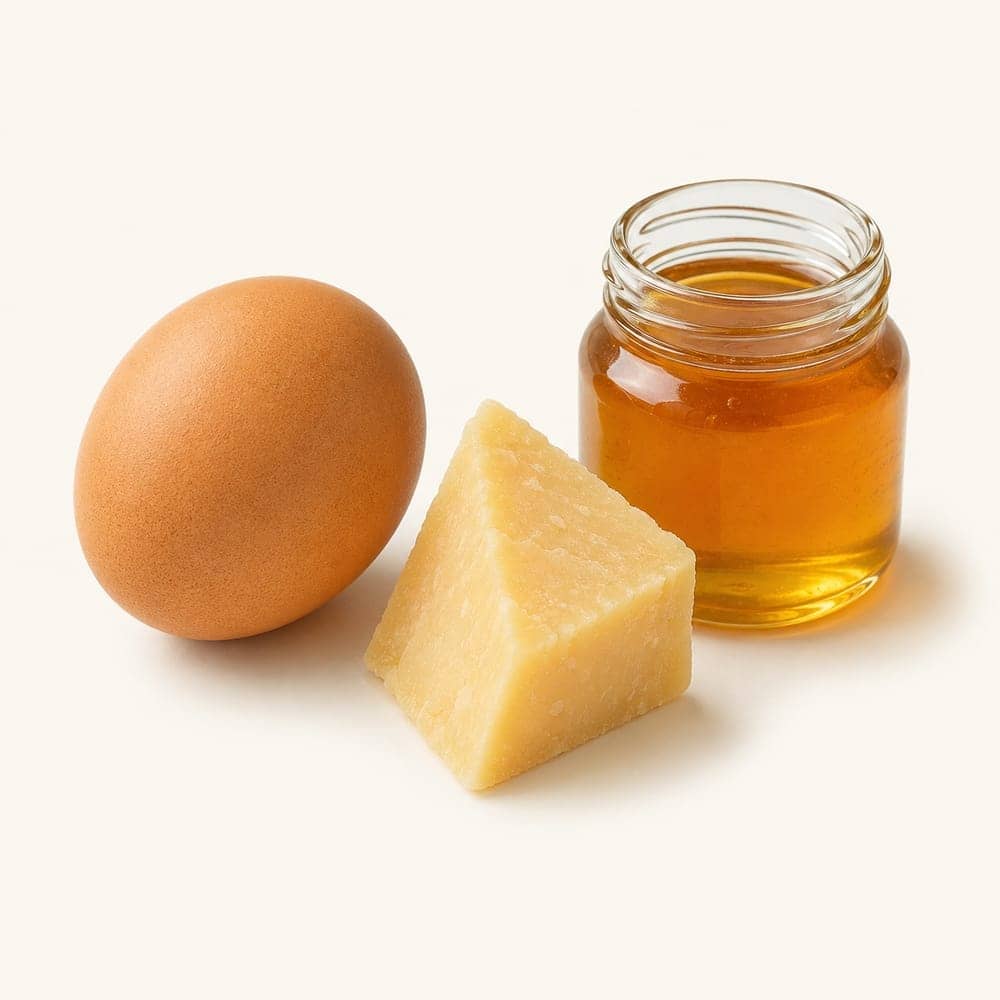
Where vegetarian claims fail: the wording
The certificate states the verified variant; the label must match it exactly. These are the wordings that pass — and the ones that quietly change the claim.
| Certified variant | Label wording that matches | Wording that does not |
|---|---|---|
| Lacto-vegetarian | “Lacto-vegetarian” · “Vegetarian — contains milk, no egg” | Any “dairy-free” or “vegan” wording; a bare “vegetarian” claim only works in markets where vegetarian implies egg-free by default |
| Ovo-vegetarian | “Ovo-vegetarian” · “Vegetarian — contains egg, dairy-free” | A bare “vegetarian” claim in egg-excluding markets (notably India, where egg-containing food is legally non-vegetarian) |
| Lacto-ovo vegetarian | “Vegetarian” in most Western markets · “Lacto-ovo vegetarian” everywhere | Any “egg-free”, “dairy-free” or “plant-based” qualifier — those are different claims with different evidence |
All variants exclude meat, fish and slaughter by-products — gelatin, animal rennet, isinglass — wherever they appear in the file.
Built for your scope — and plain about the rest
Built for
- Products containing dairy or eggs that can’t honestly claim vegan
- Exporters to India and South Asia adding internationally readable verification
- Supplement brands with vegetarian but not vegan formulations
- Food producers serving vegetarian consumers who check for a mark
Not built for
- FSSAI compliance — India’s veg/non-veg marking is a legal requirement we do not replace
- Products that qualify for vegan — that’s the stronger claim, and we’ll say so
If vegetarian isn’t the right mark for your file, we’ll tell you before you pay anything.
Process — three steps
Apply · online
Apply online
Your marks, your product category, your scope — no documents needed yet, and nothing to pay at application.
Review · documents, not visits
Remote desk review
A named reviewer works through your formulations, ingredient specifications and supplier declarations against the V-Cert Vegetarian Standard — no site visit.
Issue · decision day
Certificate + mark artwork
Your certificate arrives with its own number and QR code, alongside mark artwork in four formats. From that day a buyer can check the number without going through you.
Typical desk review: 5–10 business days from complete documentation.
What the Vegetarian mark requires
These are the requirements themselves — not a summary of them.
- No meat, fish, shellfish or slaughter by-products, including gelatin and animal rennet
- Variant definition — lacto, ovo or lacto-ovo — stated on the certificate face
- Supplier declarations for ambiguous-origin ingredients: enzymes, glycerin, omega-3s, vitamin D3
- Label wording must match the certified variant exactly
- Mark used only on certified products within the stated scope
Vegetarian certification at a glance
| Scope | Lacto / ovo variants defined |
|---|---|
| Review model | Remote desk review of documents, wherever you manufacture |
| Quote | Calculated at application — nothing to pay until you approve |
| Standard | V-Cert Vegetarian Standard |
| Verification | Every certificate carries a number and a QR code — anyone can check it, current status included |
| Renewal | Annual — a re-review of deltas and refreshed declarations |
Go deeper
Add non-GMO from the same document set — the origin paperwork overlaps heavily. And if your formulation is one supplier swap from vegan, your reviewer says so during the review: the stronger claim is a document change, not a second application. One application, one review, one invoice.

Tools and ingredients for a Vegetarian claim
Four working instruments for this claim — check your file, look up an ingredient, read the guides, and arm the person who signs off.
Questions the page hasn’t answered
What do lacto, ovo and lacto-ovo permit?
Lacto permits dairy; ovo permits eggs; lacto-ovo permits both. All three exclude meat, fish and slaughter by-products. Which variant your product qualifies for is settled in the review, and the certificate states it — so your label wording and the verified variant always match.
How is vegetarian certification different from vegan?
Vegetarian permits dairy and eggs; vegan excludes every animal-derived ingredient. If your formulation qualifies for vegan, that is the stronger claim. The decision logic, case by case, is in vegetarian vs vegan certification.
Does the V-Cert mark replace India’s FSSAI veg logo?
No — FSSAI veg/non-veg marking is a legal requirement for products sold in India. A third-party mark adds independent, internationally readable verification on top of it. How the two work together is in vegetarian certification in India.
Is V-Cert accredited?
V-Cert is an independent certification body and is not ISO/IEC 17065 accredited. What each mark requires and the rules for granting, suspending and withdrawing certificates are published, and every certificate is verifiable by QR code.
What does vegetarian certification cost?
Your exact figure is calculated at application and shown before any payment. The inputs that move a quote are on the pricing page; adding vegetarian to a vegan or multi-mark file changes the invoice, not the timeline.
Desk-Review Document Checklist (Vegetarian)
Every document our reviewers ask for in a vegetarian desk review — one email field, nothing else.
Page last updated
A first-class mark for a first-class claim
Start the application whenever your file is ready — a person reads every one.
- Free to apply
- No card, no deposit — nothing is payable until you approve a quote.
- Your quote, scoped to you
- Your quote is scoped by a certification reviewer who has read your product list.
- We disqualify ourselves out loud
- If a desk review — or V-Cert itself — is not the right fit for your scope, we say so at the quote stage.
Not sure the Vegetarian mark fits your file? Ask the V-Cert Certification Team before you apply — a reviewer reads every message.
info@v-cert.org